9. Conclusion
For the past 30+ years, engineers and researchers have been independently collecting pile load tests and relevant subsurface data while organizing this information into structurally dissimilar repositories. Despite their competent efforts, the overall result was highly fragmented with very little benefit to the greater geotechnical community. Meanwhile, scientists aided by state-of-the-art data analytics have been transforming their respective industries, producing remarkable predictions and insights. The current unstructured and decentralized scheme of valuable pile load test data has provided few benefits. Instead it has been a hindrance to the geotechnical community at large.
Use of load test databases for comparison between calculated and interpreted capacities has provided insights on the suitability of use of design methods under varying pile and soil conditions. Past studies have generally demonstrated that all methods in use for calculating the ultimate capacity of single piles have large margins of error. This dissertation verified past findings and expanded the evaluation for Large Diameter Open Ended Piles (LDOEP) discovering similarly poor performance.
9.1. Summary
As part of this doctoral dissertation, a multi-tiered system, called NYU Pile Capacity was developed that allowed for the collaborative data storage, cleaning and analysis of data for deep foundations. NYU Pile Capacity has a relational database backend and a friendly HTML interface for user interactions. Existing load test databases have been delivered as locally installed software applications. NYU Pile Capacity, however, required no software installations and was served over the Internet as a web application. Users can log in and instantly start running custom aggregate analyses on the 5,000+ records that were imported from existing datasets or add new records.
NYU Pile Capacity was built using Python Flask and can batch-process multiple load test records for practically countless combinations of soil conditions and pile types. Furthermore, NYU Pile Capacity was designed to be extended in order to run additional analyses with minimal updates to its core codebase.
When investigating the performance of the popular FHWA design method, scatter between measured (interpreted) and predicted capacities was significant, where the computed capacity was off by a factor of two in many tests. The range in calculated to measured (i.e. interpreted) capacities (\(Q_c/Q_m\)) was from 0.12 to 8.88, and the mean \(Q_c/Q_m\) was 1.48. Preliminary evaluation suggested that the method performed better in clay than in sand and overpredicted the capacities of long and larger diameter piles. This study can permit engineers and state agencies to better understand the efficacy of this most commonly employed design method, thus resulting in more resilient infrastructure.
The efficacy of four commonly used pile design methods was explored. These were the methods proposed by: (1) FHWA (2) The US Army Corps of Engineers, (3) American Petroleum Institute (API) as well as (4) the Lambda method. Interpreted capacity from static load test data was also obtained using the modified Davisson Criterion. Scatter between measured (interpreted) and predicted capacities was significant, where the computed capacity was off by a factor of two in many tests. Use of a load test for determining the capacity of LDOEP was therefore strongly encouraged. Several plugging conditions were considered. All four methods achieved better predictions for the unplugged condition, suggesting that LDOEPs do not develop significant end bearing, possibly because the deformation required to develop end bearing are not achieved for these piles.
Fourteen of the most commonly used capacity interpretation criteria were evaluated in an effort to determine the best criterion to be used for LDOEPs. These methods were evaluated using a database of 74 load tests conducted on LDOEPs. The applicability of these methods and their correlation with each other and with the pile diameter and length were also examined. The effect of the pile diameter, pile length, and the soil type on the performance of each criterion was also explored. It was concluded that none of these methods was superior to the others, and their performance was somewhat close to each other. However, some were more applicable in more cases than others. It was also concluded that the Standard Davisson Offset method, and the New York City Building Code criteria showed better performance with respect to the other methods as they had the highest accuracy and among the lowest of the standard deviations.
Another major finding of this dissertation is that given a large enough training sample, pile capacity can be reliably estimated by employing Machine Learning techniques. In projects that involve a large number of pile foundations, not all piles are individually designed and checked. Existing design software do not run aggregate analyses, and manually repeating the process hundreds of times would be extremely time consuming. However, working off of a reliable approximation of subsurface conditions for the entire site based on the results of site investigation, every pile on site can be designed or checked via batch processing and an iterative optimization process. A proof-of-concept of this alternative design process was presented where a Support Vector Machine algorithm outperformed the Federal design method for driven piles. Perhaps more remarkably, the predictive model outperformed the FHWA pile design method by relying only on seven readily available features as compared to a laborious and error-prone design methodology.
Finally, the dissertation presented the argument for the case-based design of driven pile foundations. Most of the existing design methods attempted to generalize and provide recommendations for all soil conditions and all pile types. There was, however, little focus on the performance of these methods for specific soil conditions and pile types. The industry implemented the design methods as blanket solutions expecting that they would perform well for all cases. The custom tools developed in this study provided the flexibility to run aggregate analyses on groups of load test records with similar characteristics. The results of these analyses revealed that design methods do not perform equally well for all cases. Gaining insights into the cases for which design methods perform best can enable enhanced pile design workflows where instead of using a single method to calculate capacities, a combination of methods can be employed depending on the soil conditions and pile type. Hence, case-based design can lead to safer and cost-effective designs for driven pile foundations.
9.2. Recommendations for Future Research
Undoubtedly, every doctoral dissertation study has faced a unique set of challenges. For this study, perhaps the biggest challenge was gaining expertise on practical and scientific areas outside of Geotechnical Engineering in order to rise above technological and analytical limitations and implement the principal vision of large-scale investigations of driven piles. Beyond fulfilling the research objectives, the front-heavy approach of this study established a solid foundation for multiple areas that can now be explored.
First and foremost, there is a lot of work that can be done on better defining case-based design. There is a large number of combinations of soil conditions and pile types that could be explored in identifying the ideal design method for each.
Next, the unifying database schema and NYU Pile Capacity could be adopted by city, state or federal agencies, both as a means for improving their operational workflow and for expanding the dataset and allowing the research community to benefit from the added data.
Similar to case-based design, the work done so far can be expanded to produce more reliable resistance factors. Current pile design manuals provide resistance factors for only a few design and capacity interpretation methods. Since the most popular design methods and nearly all interpretation methods have already been implemented as part of this study, it would be possible to expand the scope and provide recommendations for new and/or revised factors.
Finally, the author sees a lot of potential in accurately simulating the behavior of piles during installation and testing. A tremendous amount of effort was spent in collecting, cleaning and organizing load test data. Despite the effort, the nature of the data and the status of the industry make it almost impossible to get even close the Big Data range. However, the existing dataset could perhaps be used for validation in producing reliable simulations. And in turn, these simulations could be used to explore the application of Machine Learning as a level of abstraction in producing simpler, yet more efficient design methodologies.
9.3. Data Interchange for Geotechnical and Geoenvironmental Specialists (DIGGS)
The Data Interchange for Geotechnical and Geoenvironmental Specialists (DIGGS) is an XML-based data transfer standard that is gaining widespread acceptance in the geotechnical and geoenvironmental communities. Originally developed using funding from the Federal Highway Administration (FHWA) to efficiently capture data related to geotechnical boring logs, cone penetration test (CPT) soundings, and lab testing results, the data transfer protocol is rapidly gaining traction. It has been shown to have beneficial impacts in other allied areas where disparate parties (i.e., consultants, contractors, vendors, etc.) routinely publish/submit data as part of project deliverables. The historic problem is that many of these submissions use paper copies to transmit valuable data for the project data that may extend beyond the “technical” aspects of the project (i.e., equipment operating conditions, construction production rates, project costs, etc.). This data could be used by multiple parties to assess project performance and safety, as well as to track productivity, and more. Currently, in the limited situations when actual data are compiled and transmitted, data is often submitted as an author-specific (and often proprietary) software application and must then be re-entered into other software applications (i.e., analysis software, database, etc.) for use beyond simple data collection. An initiative undertaken by the Geo-Institute (G-I) of the American Society of Civil Engineers (ASCE) focuses on exploiting the full potential of DIGGS to geoprofessionals both within and outside of the transportation community. The deep foundations industry represents one community that could benefit significantly from using DIGGS. Data of interest to DFI members include production records, quality assurance information (i.e., verticality and alignment, concrete strength), and, importantly, load test results. When adopting DIGGS, users need not modify how they capture data, but rather will use DIGGS as a vehicle to transfer data to other applications in a standard format where it can be shared, used, stored, and retrieved. More information on DIGGS is available at https://www.geoinstitute.org/special-projects/diggs.
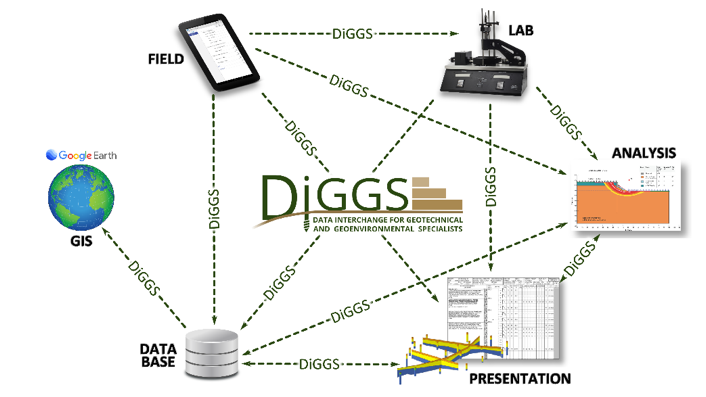
Fig. 9.1 Schematic of DIGGS Interoperability (after diggsml.org and Bachus et al., 2019)
Since 2017, the author has been actively involved in DIGGS activities, working on extending the DIGGS schema as well as developing tools that allow for data ingestion and conversion. The efforts include presentations to national conferences as well as co-authorship of papers and case studies with other DIGGS professionals (Bachus et al., 2018; Bachus et al., 2019).
At the 44th Annual Conference on Deep Foundations of the Deep Foundation Institute, the author demonstrated the benefits of adoption DIGGS for pile load test data. For the past 30+ years, engineers and researchers have been independently collecting pile load test and relevant subsurface data while organizing this information into structurally dissimilar repositories. Despite their competent efforts, the overall result is highly fragmented with very little benefit to the greater geotechnical community. Meanwhile, scientists aided by state-of-the-art data analytics have been transforming their respective industries, producing remarkable predictions and insights. The unstructured and decentralized current scheme of this valuable pile load test data is a hindrance to the geotechnical community at large.
Geotechnical engineers working with deep foundations do not have to look further than the current methods commonly used (and still being taught) for designing deep foundations to understand the importance and potential benefits of efficient data management. Many of the methods currently in use for pile design are empirical (or at least semi-empirical), based on small databases of interpreted load test data, with empirical formulas that required gross overgeneralization to develop. Specifically:
Granular Soils: Nordlund (1963) developed a method of calculating bearing capacity of driven piles in cohesionless soils from as few as 41 load tests from 8 different test sites. The piles represented by these data range in diameter from 12 to 16 inches in diameter.
Cohesive Soils: Tomlinson (1957) employed a small data set of 56 piles to develop his popular \(\alpha\)-method. The piles considered by Tomlinson varied from 6 to 30 inches in diameter. And the clays varied from soft to very stiff over-consolidated clays.
Consider that in the age of modern pile driving and a full suite of energy-feedback capabilities and load tests, a conservative estimate is that the profession has designed and installed more than 1,000,000 driven piles. Similarly, it is anticipated that more than 100,000 load tests have been conducted worldwide, yet the most commonly cited design approaches are more than 60 years old and rely on less than 100 load test records. The inherit generalization of these methods could be improved dramatically by allowing contractors, researchers, and other interested parties the ability to analyze the vast number of high-quality load test and production data that pile driving/testing specialists are currently producing. Based on the author’s experience, the main hindrance in doing so is finding a convenient way to share deep foundation performance-related information. A standard XML file structure could solve this problem. A pile foundation load test is a project that requires and generates a significant amount of complex data. An engineer working on such a project would have multiple files, of varying formats, spread across several folders in their computer along with pages of notes and other reports. Sharing the relevant geotechnical, pile property, and load test data is far from a straightforward process. DIGGS is an ideal framework for accomplishing facilitating data distribution of this data.
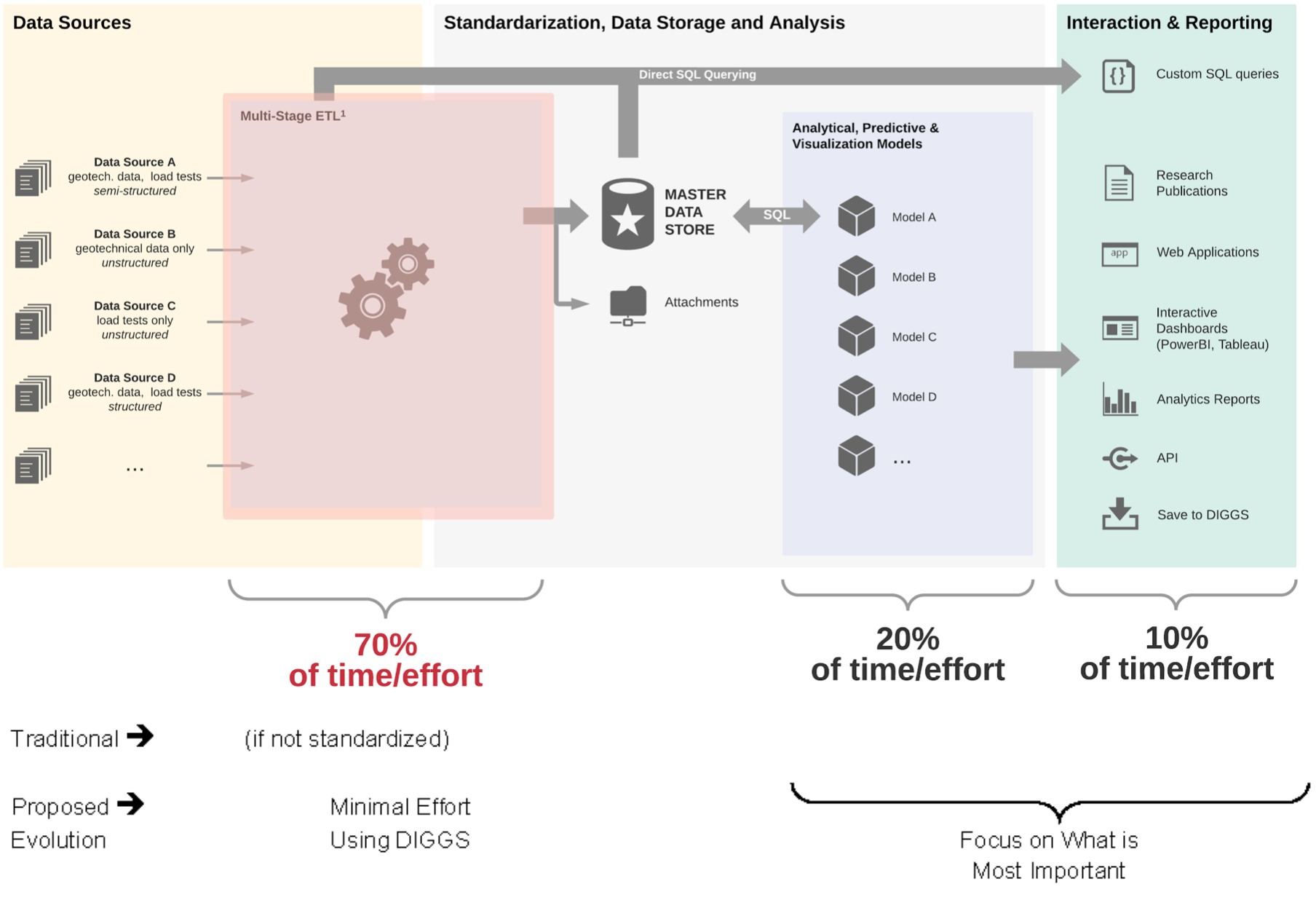
Fig. 9.2 Data Workflow of Pile Load Test Data Warehouse (after Bachus et al., 2019)
Fig. 9.2 shows a typical work flow that is anticipated if someone were to tackle the problem with developing and managing a pile load test database for widespread public use. Given the diversity and quantity of existing data, experience has shown that collecting, compiling, and simply handling the data comprises approximately 60 to 80 percent of the total effort. This entails extracting relevant information from the original sources and transforming it in a format that is consistent for input into the database. Traditionally, this a mostly a manual process that often requires entering the same data in multiple applications, at different times, by different people. Once the data are available in a consistent format (i.e., once in a consistent and complete database), the remaining approximately 30 percent of total effort is spent extracting the data for analysis. This latter effort is, in fact, the objective of the entire process, but it would take considerable resources to achieve this objective. As shown in Fig. 9.2, if the data were available in a DIGGS-compliant XML file format, this error-prone and inefficient process of moving data around could be eliminated.

Fig. 9.3 Expansion of DIGGS to Include Pile and Load Test Data (after Bachus et al., 2019)
Although DIGGS was originally developed for geotechnical and transportation projects, it is envisioned to have a much wider range of applicability. The range includes the deep foundations community where vast amounts of valuable data are generated and could be beneficially utilized by the industry, its practitioners and academicians. All of this information actually qualifies as data that can be appropriately managed and should be available to the owner/operator regardless of the entity that performs/monitors the installation. DIGGS is a logical and ideal protocol for these efforts. Figure 4 shows how DIGGS as it exists today can be relatively easily expanded to pile and load test data. The forms identified in this figure could be completed from an existing paper copy or an Excel spreadsheet. In the future, data could be captured at the source using a field-deployed tablet, and/or a web-enabled form on a tablet or smart phone.
Once the form is populated, a DIGGS file will be automatically generated and can be transferred to a database. In some cases, the inspection may require the collection of data from sensors (i.e., pressure, temperature, flow, etc.). This data, too, can be collected in the field on a form similar to that shown in Fig. 9.3. Once data are entered into the forms identified in Fig. 9.3, a DIGGS file can be generated and transferred to the database shown in Fig. 9.2.
In understanding the similarities between databases (formally referenced as Relational Database Management Systems, RDBMS, that include Access, SQL Server, SAP, Oracle, etc.) and other data file formats, it is important to understand their respective properties, advantages, and disadvantages. Proper database design follows strict rules that are needed to create a structure (aka schema) which can facilitate efficient data storage and retrieval. Information is stored in tables that are linked with each other, ensuring data integrity. Although each database system may rely on different schema rules, there is one thing to remember about databases, that is, they result in a complex, yet highly efficient structure. Internally, this represents a significant advantage because once an agency adopts a specific (and usually proprietary) database system, the rules regarding the structure become well-known and can be implemented internally by multiple parties. However, should the agency decide to switch database systems or software programs, or if the agency desires to communicate with others who utilize the same of different systems or software, the complexities of the adopted data structure can pose significant challenges. Since most agencies and organizations adopt different programs that utilize different schemas, the end result is a complex and fragmented data infrastructure.
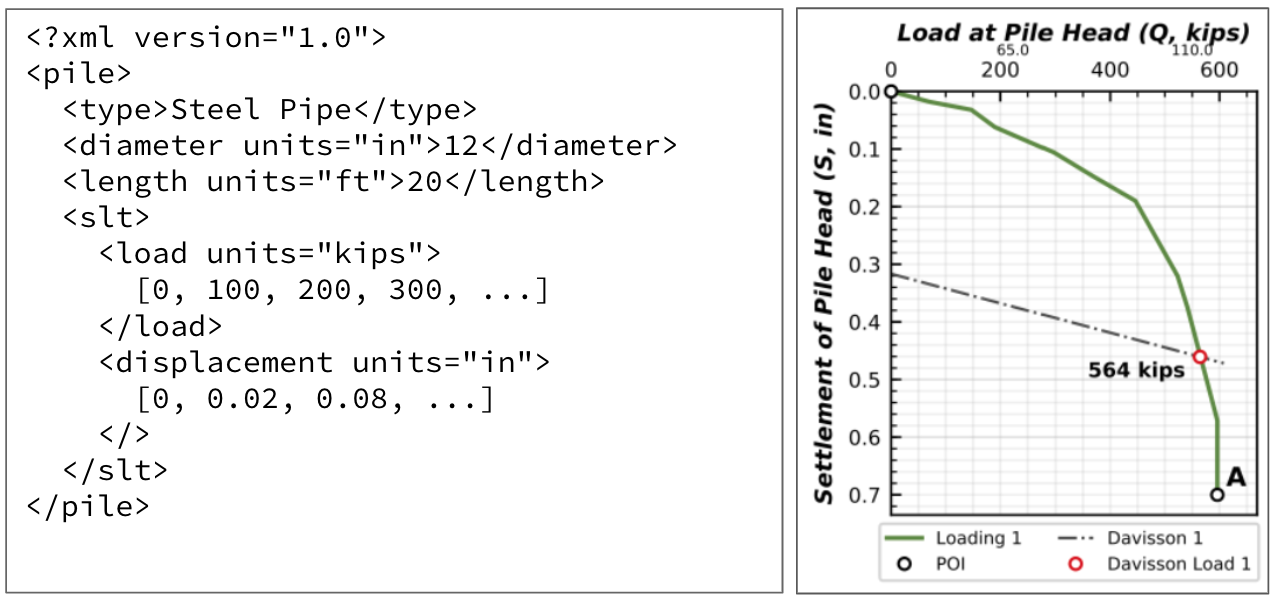
Fig. 9.4 Data Transfer of Static Load Tests Using XML
The problem identified above could be resolved if every organization utilized the same RDBMS. While this may be a noble goal, it does not reflect reality. An alternative to a relational database for storing or transferring data is a hierarchical data format such as the eXtensible Markup Language (XML), which defines a set of rules so that information may be stored easily in files. Unlike standard RDBMS, the structure of XML files is not complex and is human-readable. Information is stored in plain text format within tags that are labeled according to the details that are contained between them. For instance, the basic structure of an XML file storing pile properties and load test results is presented in Fig. 9.4.
As long as two parties agree on the file structure, i.e. that pile diameter will always be stored within tags named diameter and that pile length will always be stored within tags named length, then information storage and transport can become highly efficient for all parties desiring to share this data. Furthermore, data from XML files can easily be ported to a large-scale RDBMS by matching XML tags to database attributes. The advantage of the XML file transfer concept is that it is agnostic to a specific RDBMS, so it addresses one of the major obstacles regarding the external sharing of data described above. The disadvantage is that someone has to define the schema and tags for the XML files. This is precisely the role and intention that led to the development of DIGGS.